.png)
Transportation Industry
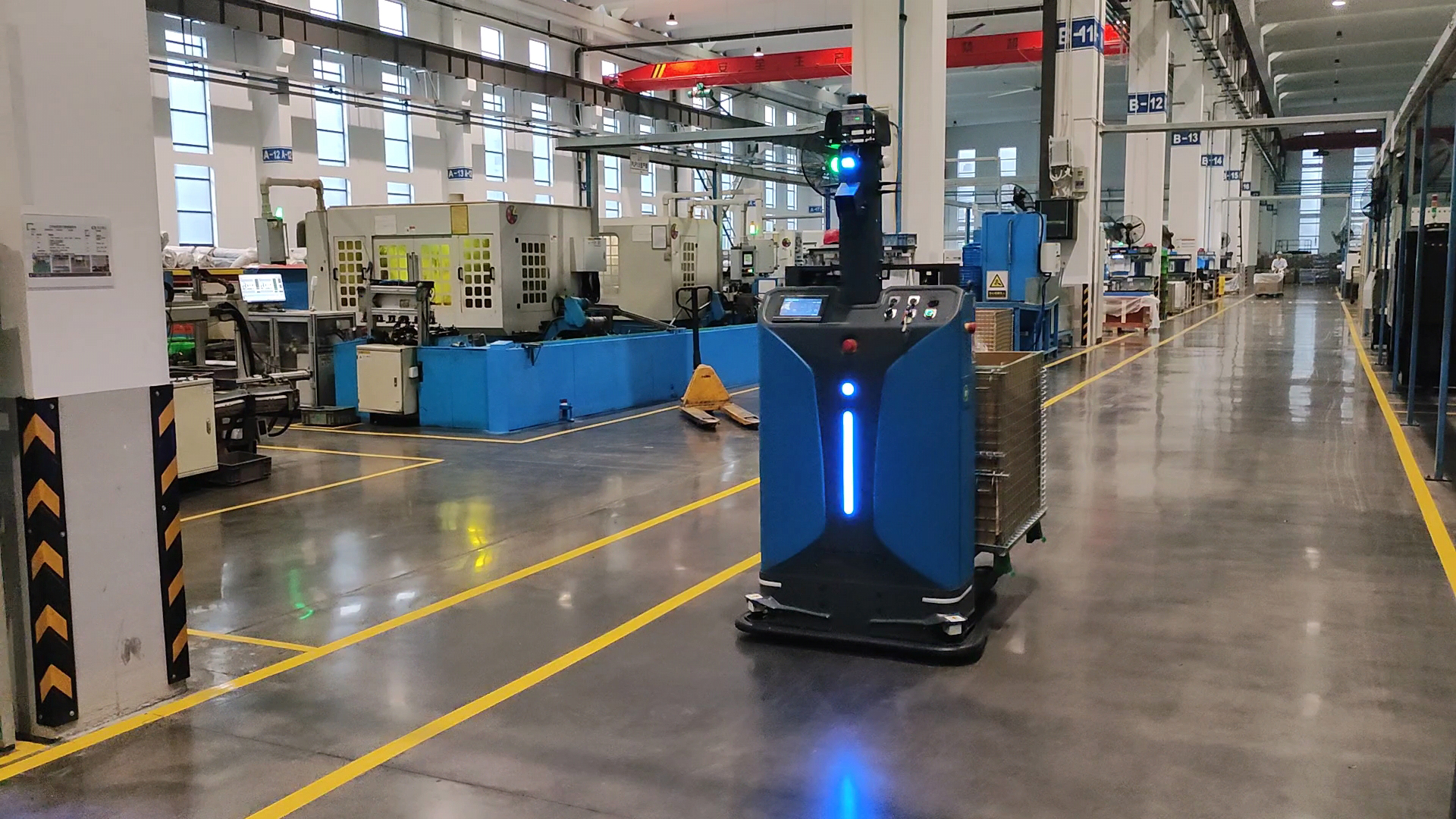
Industrial transport robots
The use of mobile robots for transportation of loads and materials has increased by 45% (+ 49,500 units sold), according to the World Robotics report. This increase in demand shows an all-time high of robots distributed in factories, warehouses and industrial plants.
Transportation robots are not new to the industrial sector. AGVs are widely used for this type of task. However, innovation in this vertical comes with the new possibilities offered by AMR, based on free navigation and classified as collaborative robots.
Transport AGV’s (Autonomous Guided Vehicles) are one of the traditional robotic devices used to carry out load transport tasks. However, in recent years the trend shows an increase in AMR (Autonomous Mobile Robots) focused on these transport tasks.
Return on Investment – ROI
In 2021, for the first time, more AMRs were sold than AGVs and statistics show a return on investment (ROI) of over 20% to 50%.
What is the reason for the growth of autonomous mobile transportation robots?
What is the reason for the growth of autonomous mobile transportation robots?
Think of a warehouse where you have ever been: does the image of workers pushing or dragging heavy loads from one place to another come to mind? Or transporting material using forklifts? Are you aware of the human and economic cost of these manual operations for a company and its workers?
This strenuous labour involved in the transport of goods is present in many sectors. In the healthcare sector, for example, IFR* studies indicate that nurses and healthcare workers spend up to 20% of their working day performing tasks that could be automated using transport robotics. The global economic cost is billions of euros.
The operation of factories, warehouses and production plants is complex and involves a wide range of tasks. It requires operators to spend much of their time on repetitive, monotonous and costly tasks. The use of transport robots reduces this unproductive time. Autonomous transport robots make these processes profitable at an unprecedented rate.
Technology of transport robots
Cordyrobot’s mobile robots carry out applications for transporting materials and loads autonomously. They are advanced robotic systems that, if they come across an unexpected obstacle on the way, will recalculate the most effective route or stop, as appropriate.
This is thanks to the development of powerful software and integrated components such as laser scanners, sensors or advanced vision systems.
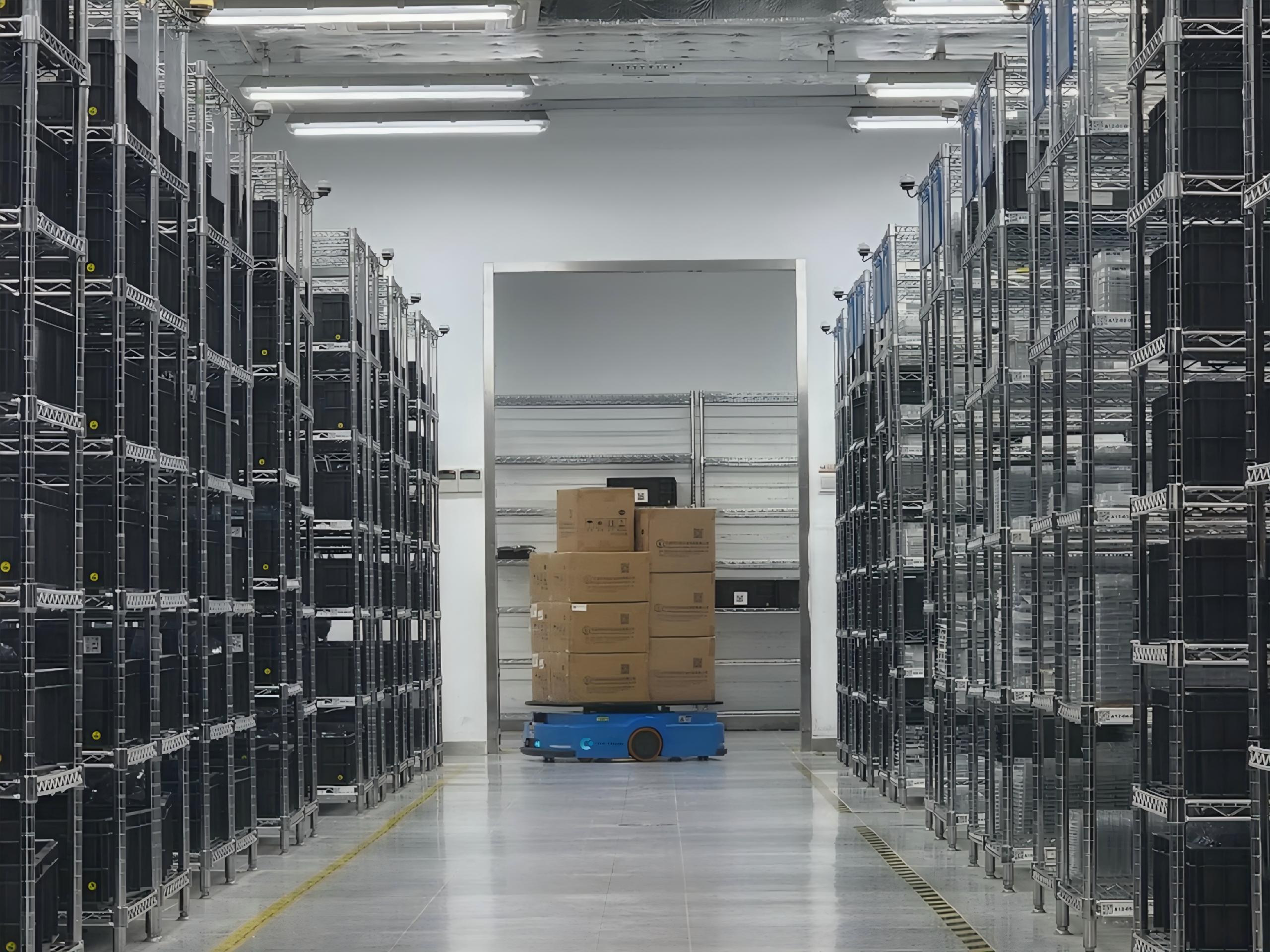
These transport robots have hardware designed to navigate smoothly through any type of facility, including confined spaces or narrow aisles.
Many warehouses incorporate more than one transport robot. The Fleet Management System (FMS) is software developed by Robotnik to manage them from a single device remotely and simultaneously, optimising the performance of the fleet.
Also notable is Cordyrobot‘s Advanced User Interface, through which the robot can be remotely controlled and monitored from different devices (mobile phone, tablet…). The robot can be operated intuitively and simply.
Transport robots are a tool that reduces production costs, increases the pace of production and improves the quality of human labour.