.png)
Smart Warehouse Automation
Customer Background
The customer is a large automotive components manufacturer supplying products to several global vehicle brands. The facility operates multiple production lines and processes thousands of components every day.
As production volume continued to increase, the company faced growing challenges in managing internal material transportation. Traditional forklift operations required significant manpower and often resulted in congestion on factory roads, affecting overall production efficiency.
The management team sought a smarter and more flexible automation solution that could improve material flow without requiring major modifications to the existing facility infrastructure.
Solution
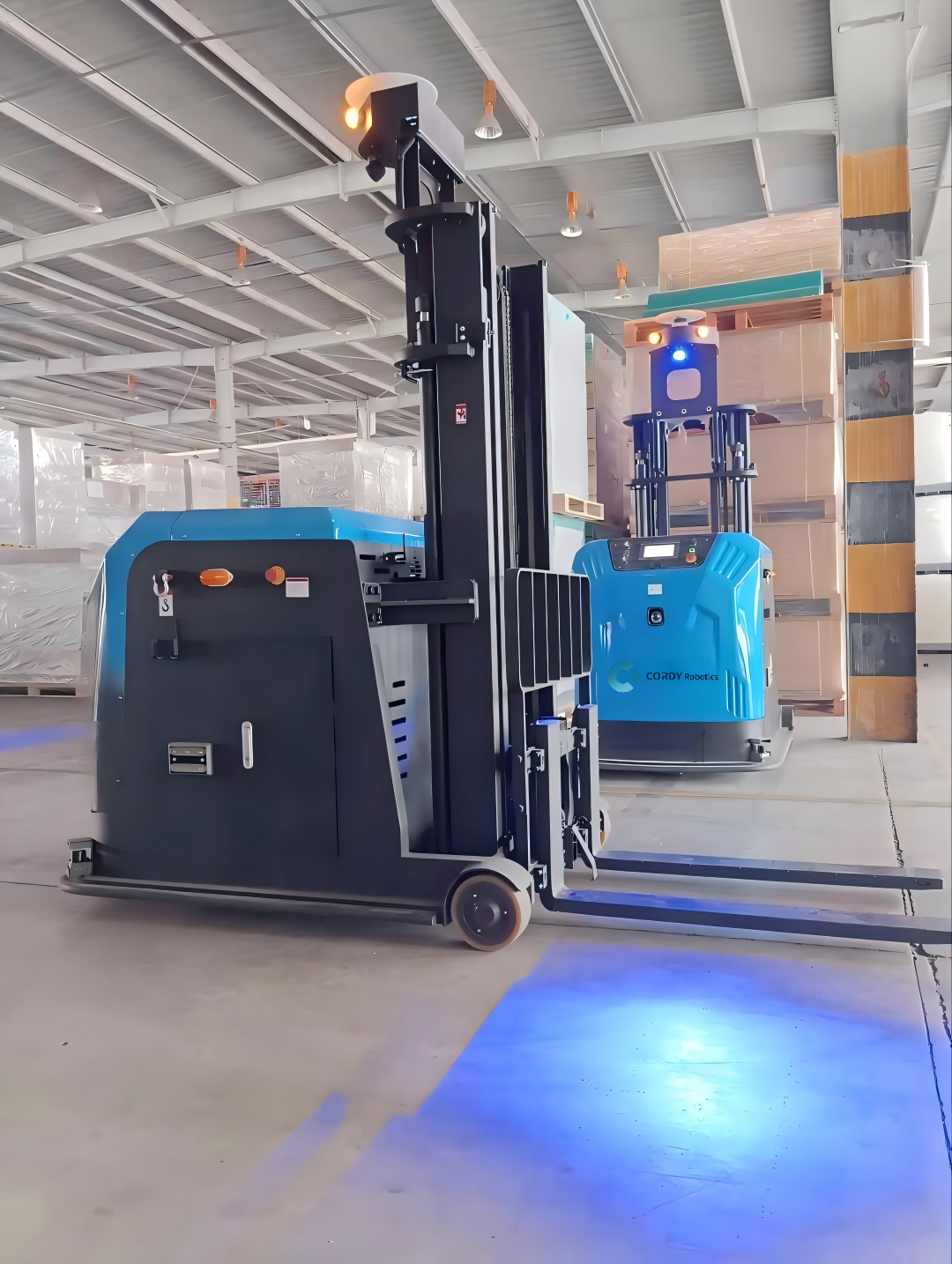
After a comprehensive site survey and workflow analysis, our engineering team designed a customized AMR solution tailored to the customer’s operational requirements.
The project included:
- 15 Autonomous Mobile Robots
- Fleet Management System
- Traffic Control System
- Warehouse Management Integration
- Production Line Interface Integration
- Real-time Monitoring Dashboard
The robots utilize advanced SLAM navigation technology, enabling them to operate without magnetic strips or extensive infrastructure modifications.
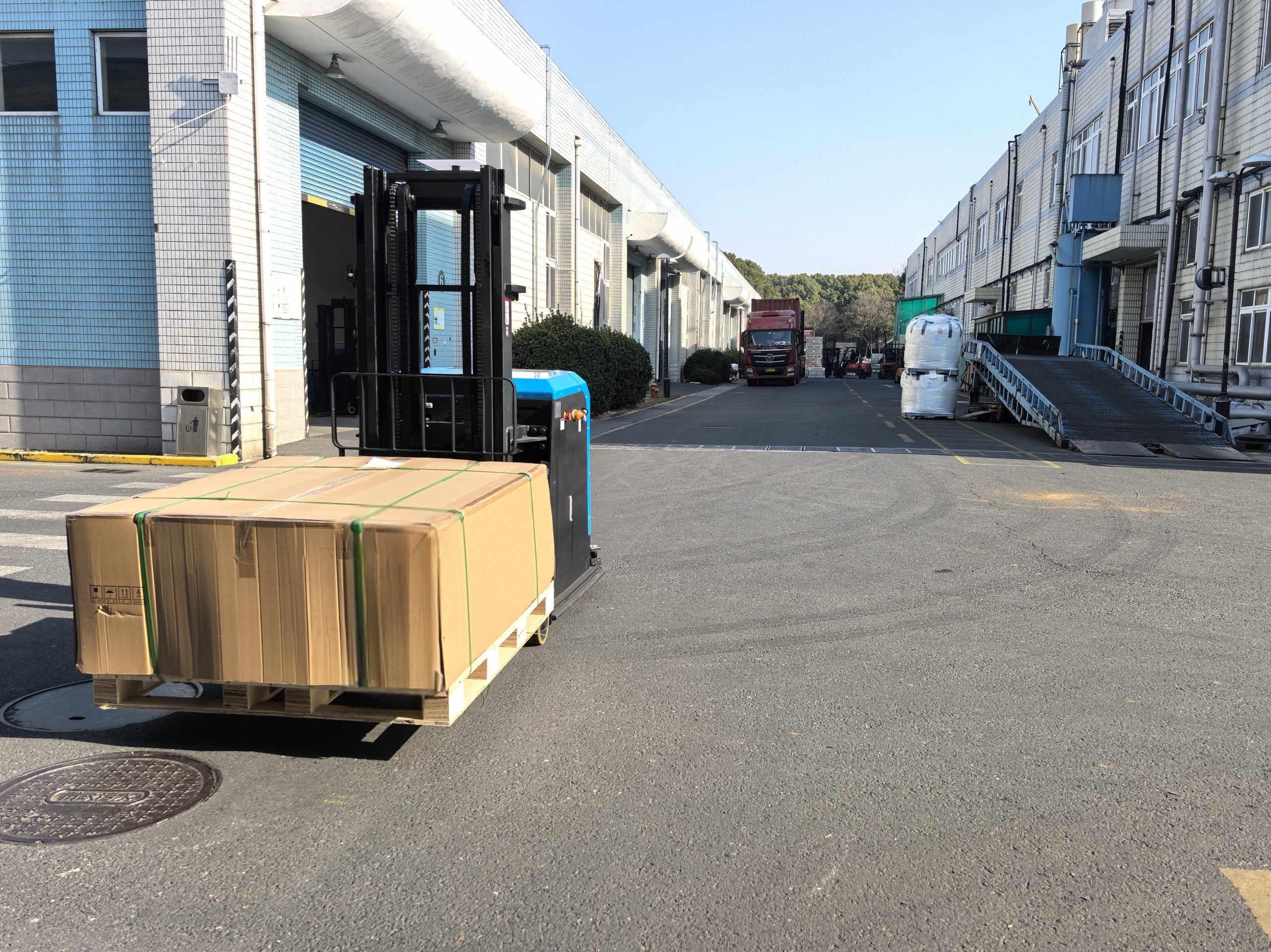
The AMRs automatically receive transportation tasks from the production management system and dynamically optimize routes according to real-time traffic conditions.
Materials are transported between:
- Raw material warehouse
- Production lines
- Intermediate storage areas
- Finished goods warehouse
- Quality inspection stations
The system operates continuously throughout multiple shifts, ensuring stable and predictable material flow across the entire facility.
Implementation Process
The deployment was completed in four phases.
Phase 1: Site Assessment
Engineers analyzed factory layouts, transportation routes, traffic density, and production schedules to determine optimal robot deployment locations.
Phase 2: System Design
A customized robot scheduling strategy was developed to ensure smooth coordination between multiple robots and existing production operations.
Phase 3: Integration
The AMR system was integrated with the customer’s MES and ERP platforms, enabling automatic task generation and real-time status updates.
Phase 4: Testing and Optimization
After installation, the system underwent extensive testing and route optimization to maximize transportation efficiency.
The entire deployment was completed with minimal disruption to daily production activities.